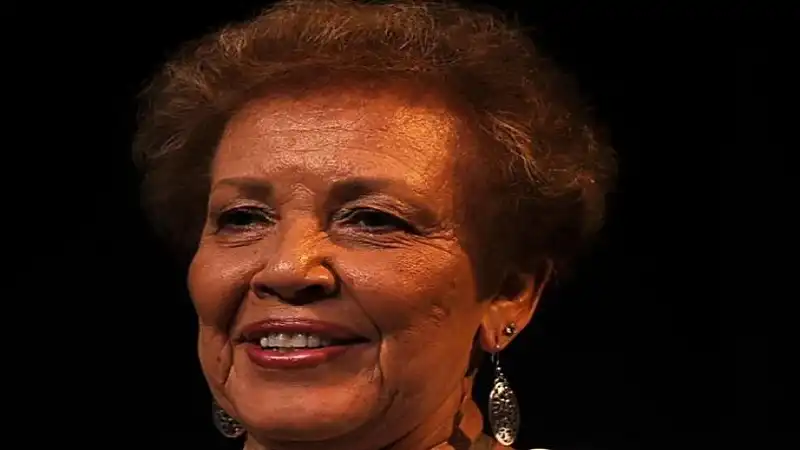
Joylette Goble is widely recognized for her contributions to science education, her professional work in engineering, and her role in preserving an important chapter of American scientific history. She is known for combining technical expertise with public engagement, helping people understand how mathematics and science shape everyday life. Her work stands at the intersection of education, advocacy, and historical awareness, making her a meaningful figure for students, educators, and anyone interested in science and social progress. This article explores her background, career, values, and lasting impact in a clear and informative way.
Early Life and Educational Foundations
Joylette Goble was raised in an environment where curiosity, discipline, and learning were strongly encouraged. Growing up in a household that valued education meant that problem-solving and critical thinking were not abstract ideas but daily practices. Mathematics and science were presented as practical tools—ways to understand the world rather than subjects to fear.
Her formal education followed this mindset. She pursued advanced studies in mathematics and engineering, building a strong academic foundation that would later support her professional and advocacy work. During her academic journey, she learned not only technical skills but also how to communicate complex ideas clearly, a talent that would become essential in her later outreach efforts.
Education, for her, was never just about personal achievement. It was about preparation—preparing to contribute, to teach, and to create opportunities for others.
Professional Career in Engineering and Technology
In her professional life, joylette goble worked in engineering and technology-related roles that required precision, analytical thinking, and teamwork. Engineering environments demand accuracy and accountability, and her work reflected those standards. She was involved in problem-solving processes that relied heavily on mathematical modeling, systems thinking, and data analysis.
Her career demonstrated that mathematics is not confined to classrooms or textbooks. Instead, it is a living discipline applied to real-world challenges, from technology development to systems management. By working in technical fields, she became a practical example of how strong mathematical skills can open doors to meaningful and impactful careers.
Equally important was her ability to collaborate across disciplines. Engineering projects often involve diverse teams, and her experience highlighted the value of communication, mutual respect, and shared goals in technical success.
Advocacy for STEM Education
One of the most influential aspects of her life has been her dedication to STEM education—science, technology, engineering, and mathematics. joylette goble has consistently emphasized that STEM subjects should be accessible to all students, regardless of background, gender, or socioeconomic status.
She has spoken openly about the importance of representation in education. When students see people who look like them succeeding in technical fields, abstract possibilities become real options. This belief guided her involvement in educational outreach, public speaking, and mentorship initiatives.
Her advocacy also focused on changing how mathematics is taught. She encouraged educators to move away from fear-based or overly rigid approaches and instead foster curiosity, creativity, and confidence. In her view, math education should empower students to ask questions, make mistakes, and develop problem-solving skills that apply beyond exams.
Preserving Scientific and Cultural History
Another important contribution has been her role in preserving and sharing scientific history. joylette goble co-authored a book that documents the life and achievements of her mother, mathematician Katherine Johnson, whose work played a critical role in early space exploration. Through this effort, she helped ensure that important historical contributions were accurately recorded and widely understood.
This work served multiple purposes. It honored a legacy, corrected historical omissions, and provided inspiration for future generations. By presenting history through a personal yet factual lens, she made complex scientific achievements more relatable and human.
Preserving history, in her approach, was not about nostalgia. It was about learning—understanding how perseverance, collaboration, and knowledge can overcome barriers and lead to progress.
Values and Personal Philosophy
At the core of her work lies a clear set of values: education, equity, and responsibility. joylette goble has often highlighted the idea that knowledge carries responsibility. Those who understand science and mathematics have a duty to use that knowledge ethically and to share it generously.
She also emphasized lifelong learning. In a rapidly changing world, she believed that adaptability and curiosity are just as important as formal degrees. This philosophy encouraged people of all ages to continue learning, whether through formal education, self-study, or community engagement.
Another central belief was that success is rarely achieved alone. Mentorship, family support, and community networks all play vital roles. Recognizing these influences helps build a more collaborative and supportive culture in education and professional life.
Influence on Future Generations
The influence of her work extends well beyond her immediate professional achievements. Students who encountered her talks or writings often gained a new perspective on mathematics—not as an obstacle, but as a tool for empowerment. Educators found practical inspiration in her ideas about teaching and inclusion.
Her story also helped broaden public understanding of who belongs in STEM fields. By highlighting real-life examples of diverse contributors, she challenged stereotypes and encouraged institutions to reflect on their own practices.
This influence is subtle but powerful. It appears in classrooms where students feel more confident, in curricula that acknowledge diverse contributions, and in conversations that value both technical skill and human experience.
Guidelines and Key Lessons from Her Work
The life and work of this STEM advocate offer several clear guidelines that can be applied by students, educators, and professionals:
1. Embrace Curiosity
Learning begins with questions. Curiosity should be encouraged at every stage of education and career development.
2. Make Education Inclusive
Access to quality STEM education should not depend on background or identity. Inclusion strengthens innovation.
3. Connect Theory to Practice
Mathematics and science become meaningful when linked to real-world applications and problem-solving.
4. Preserve and Share History
Understanding past achievements helps shape a more informed and equitable future.
5. Value Collaboration
Progress in science and engineering depends on teamwork, mentorship, and shared responsibility.
Conclusion
The story of Joylette Goble reflects the power of education, advocacy, and historical awareness working together. Her career in engineering, dedication to STEM education, and commitment to preserving scientific history demonstrate how one individual can influence both present and future generations. Through clear communication, strong values, and a belief in inclusive learning, she has helped reshape how people view mathematics and science—not as exclusive fields, but as shared human endeavors.
Her legacy serves as a reminder that knowledge gains its greatest value when it is shared, understood, and used to create opportunity for others.
Reed More:myhousekeeping.net